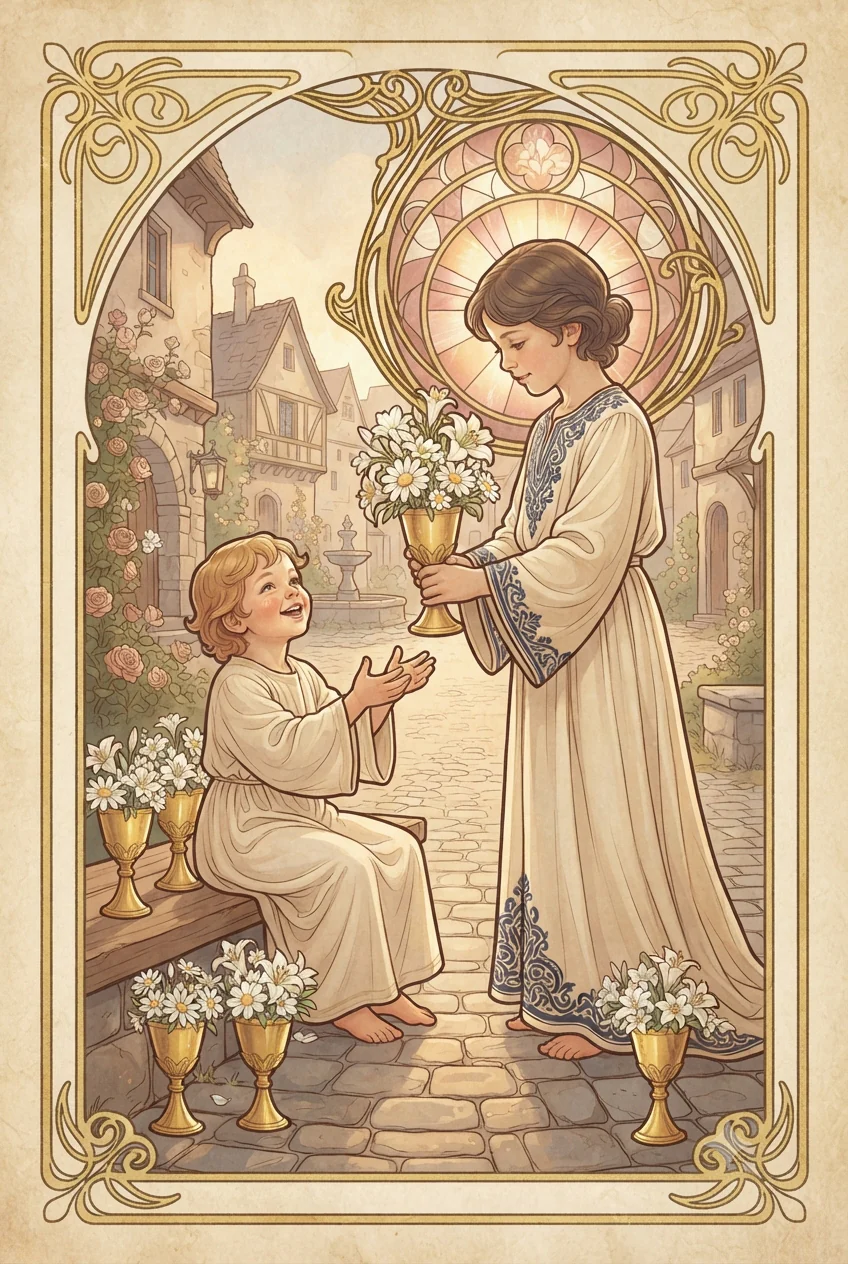
Six of Cups
Minor Arcana · Cups
Upright
NostalgiaSweet memory, reunion, innocent comfort.
Nostalgia is not a museum visit—it is a taste that arrives without warning and rearranges the present. The Six of Cups asks you to notice what a memory is doing to you right now, not what it says about the past. Sweetness remembered can soften the edges of a rough day, reconnect you to someone you thought you had lost, or remind you that you were once someone who trusted easily. That warmth is real and useful. Let it in. The child in the picture gives flowers without calculating their value; the card invites you to receive a moment of innocent comfort without overanalysing it. A reunion, an old song, the handwriting on a box in the attic—these are doorways. Step through long enough to feel replenished, then bring that gentleness back to the people in front of you today.
Reversed
Leaving homeStuck in the past, or finally leaving it.
The past can hold you so tightly you forget the door is open. Reversed, the Six of Cups points to a relationship or identity you are gripping instead of living. You catch yourself measuring every present connection against a memory it cannot win against, or rehearsing a story about who you used to be until there is no air left for who you are becoming. The sweetness here has soured into a refusal. But the reversed card also names a different moment: the one where you finally place the memory on a shelf instead of carrying it in your arms all day. Leaving home can be a physical move or an inner release—setting down an old grievance, forgiving a childhood version of yourself, or admitting that a golden period has ended and you are still breathing. Either way, the card holds up a single question: what is this attachment costing you now.
What the imagery is saying
The older child holds out a cup filled with white flowers, arm extended mid-gesture. The offering is not rushed—the hand is steady. The smaller child stands at receiving height, and the whole exchange happens in a sunlit village courtyard where more flower-filled cups sit nearby, as if sharing has been going on all morning. Sunlight floods the stone walls and the ground between them; nothing is shadowed or hidden. The white flowers are uncomplicated—no thorns, no elaborate arrangement. They are what was growing, handed over as they are. The cups do not clink or demand a toast. They just wait, held out by someone who remembers how giving worked before it got complicated. The picture is not about the past; it is about what happens when generosity is unweighted by debt.
Where this shows up
In relationships
An old friend resurfaces, or a current partner does something that reminds you of a gentler time. The connection carries an ease that recent relationships have lacked. Notice whether you are responding to the person or to the memory they trigger. Innocent comfort can heal, but it can also make you overlook who someone actually is today.
In work
A former colleague reaches out or a past project returns for a second look. Your earliest sense of why this work mattered—before paycheques and politics—flickers back into view. That spark is worth listening to. It can correct a drift toward cynicism, so long as you do not mistake a brief visit from inspiration for a full return to simpler conditions.
In how you relate to yourself
You encounter a photograph, a scent, or an old diary entry and recognise a version of yourself unguarded and hopeful. The meeting is not sentimental—it is information. That self still lives somewhere in you, and this is a chance to ask what they needed and whether you are any closer to providing it now. Comfort can be intelligence, not escape.
Common misreadings
The most common misread turns the Six of Cups into a prediction that an ex-lover will return or a lost opportunity will reappear. The card does not forecast a reunion; it mirrors what happens inside you when memory colours the present. Another misread treats the card as purely rosy, ignoring that nostalgia can be a sedative. The flowers are cut, not rooted. The comfort is genuine but temporary—the card asks you to receive it without building a house around it. Lastly, the reversed card is sometimes softened into 'moving on' language that skips the grief. Leaving home has a cost, and the card is honest about that. It does not promise replacement, only clarity about what you are carrying and why.
Sit with this
- What memory visited me today, and what did it make me reach for or pull away from?
- When have I offered someone comfort without asking for anything in return, and what did that feel like in my hands?
- What part of my past am I still holding as a blueprint when it might only be a photograph?
Draw a personalized spread and receive a reflective reading that ties your cards to what’s on your mind — for self-reflection, not prediction.
Begin a free reading