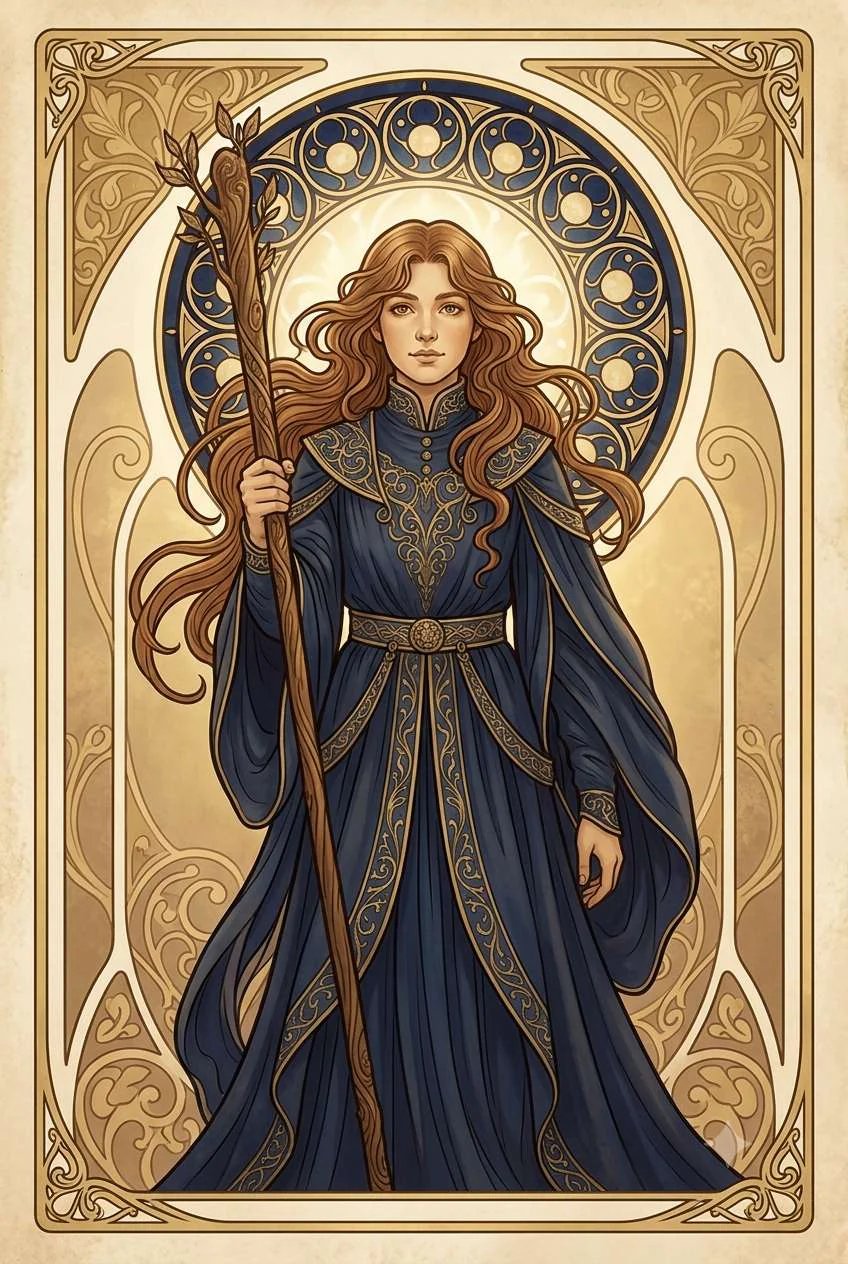
Page of Wands
Minor Arcana · Wands
Upright
EnthusiasmA curious explorer, eager to begin.
The Page of Wands is the moment a spark lands on dry kindling — before the fire is guaranteed, before anyone else smells smoke. It’s the willingness to look foolish while chasing something that only makes sense to you. This card asks you to notice where excitement is already present, not where it’s missing. The Page doesn’t have a map, a guarantee, or even a fully formed question yet. What it has is directionless momentum, the kind that makes a person say yes to an idea before they know what it will cost. That openness is not naivety. It’s a form of courage. The upright card sits with a single question: what are you protecting by refusing to be a beginner? The energy here is quick, warm, and easy to dismiss as immature. But dismissing it is often a way of avoiding the vulnerability of starting something you might not finish. Sit with the possibility that enthusiasm itself is a compass.
Reversed
HastyImpatience and a lack of direction.
Reversed, the Page of Wands becomes a scatter of sparks with no kindling underneath. The impulse to begin is still there, but it’s frantic now — starting things just to feel the brief heat of a new idea, then dropping them the moment the work turns mundane. This is enthusiasm that has soured into restlessness. The reversed card points to a hunger for novelty that leaves nothing built. It can show up as a calendar full of half-started projects, a voice that interrupts because it can’t wait to speak, or a belief that if an idea doesn’t arrive fully formed, it isn’t worth developing. The hasty quality here is not speed itself but the refusal to tolerate uncertainty. When every pause feels like a threat, action becomes a way of running. The card asks you to look at the difference between moving forward and simply moving. What would change if you sat still long enough to learn which of your impulses actually wants to grow?
What the imagery is saying
The figure stands alone in open desert, no shade, no path, nothing to lean against. This is a setting that offers neither comfort nor obvious direction — only space. The youth’s patterned tunic suggests someone with enough identity to be recognizable but not enough experience to be fixed. A tall wand, sprouting at the tip, is held not as a weapon or a staff for support but as an object of study. The eyes are on the new growth, not the horizon. The sprout itself is the only living green in the scene, and the figure’s posture says: this small, fragile thing is worth my full attention. In the distance, small pyramids sit low on the horizon — human-made forms that imply a longer journey, structures built by people who once stood where this youth is standing. The contrast between the intimate nearness of the wand and the far-off monuments is the whole tension of the image.
Where this shows up
In relationships
A friend, partner, or potential connection arrives with a spark that is easy to underestimate because it comes without polish. Someone is eager to share an idea or an adventure, and the relationship becomes the audience for that excitement. The risk is mistaking their scattered energy for disinterest when in fact they are showing you the first draft of their desire.
In work
A new project or role pulls you in before you feel ready. The energy is apprentice-like: willing, unguarded, still forming. Your instinct to jump in is not the problem. The only real misstep would be to disguise inexperience with overconfidence instead of letting the work show you what you need to learn.
In how you relate to yourself
You are in a phase of becoming that resists a label — not a finished thing, not a raw beginner, but someone holding a sprouting idea and trying to decide if it’s worth planting. The urge is to announce it or hide it. Both impulses miss the point. The act of sustained curiosity, not declaration, is what actually grows things.
Common misreadings
The most common misreading treats this card as a green light — a cosmic permission slip that says the thing you're excited about is destined to succeed. That is fortune-telling, and it strips the card of its actual weight. The Page of Wands is not a prediction of outcome. It's a portrait of a specific, fragile moment at the very beginning of a process, when the idea exists only because someone chose to pay attention to it. Treating it as a promise robs you of the agency the card is actually showing you: the youth in the desert is studying the sprout, not waiting for a sign. Another misreading dismisses the Page as merely childish. The openness here is a temporary state of receptivity that experienced people often lose.
Sit with this
- When did you last feel a spark of curiosity before you knew what to do with it — and what did you do next?
- What idea, person, or project currently has your attention in a way that feels too small to defend but too persistent to ignore?
- Describe a time you let yourself be a beginner at something that mattered to you. What did that openness make possible that competence later closed off?
Draw a personalized spread and receive a reflective reading that ties your cards to what’s on your mind — for self-reflection, not prediction.
Begin a free reading